

Finland is positioning itself as a future key location for the industrial production of synthetic fuels in Europe. According to the state economic development agency Business Finland, the country already has enough CO₂-neutral electricity to operate up to 100 e-fuel plants. The basis is a planned expansion of climate-neutral power generation by 70 percent by 2030 to 140 terawatt hours (TWh).
A central location advantage is the low electricity prices. These make the energy-intensive production of synthetic fuels economically attractive. Additionally, biogenic CO₂ from sustainably managed forestry is available as a raw material. "Not a single additional tree is felled for e-fuel production. We use only by-products that occur anyway," says Juha Peltomäki, Head of Industry, Bio & Circular at Business Finland.
The planned e-fuel plants are to produce e-kerosene, e-methanol, and e-methane, among others. Projects by international companies such as Norsk e-Fuel, Verso Energy, Liquid Wind, TES, and CPC Finland are in the planning stage. The development is supported by collaborations with research institutions like the Finnish VTT and technology partners such as the German company Ineratec.
EU mandates increasing quotas for sustainable aviation and shipping fuels
An additional impetus comes from the EU. The ReFuelEU Aviation and FuelEU Maritime regulations mandate increasing quotas for sustainable aviation and shipping fuels. The share of synthetic fuels in aviation is to rise to 35 percent by 2050.
Finland is also relying on synthetic fuels in road transport. By 2030, four percent of fuels dispensed at filling stations are to come from renewable, non-biogenic sources. This creates a stable domestic market and increases investment security for companies.
Finland aims to become climate neutral by 2035. Promoting the e-fuel industry is part of this strategy. "With a wealth of resources, political commitment, and an open attitude towards international partnerships, we are optimally positioned to decisively advance Europe's energy transition together with our partners," says Peltomäki.
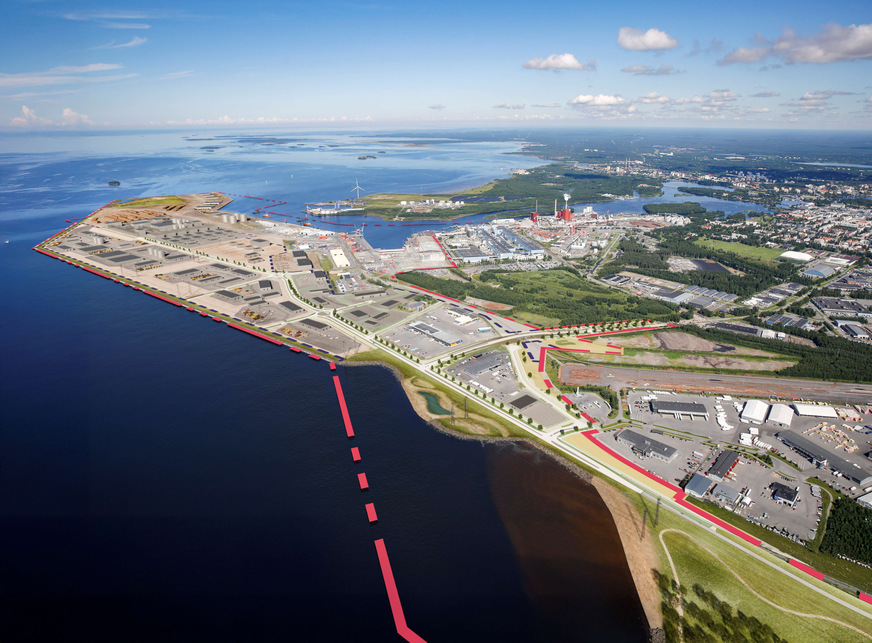
City of Oulu)