

© Fraunhofer UMSICHT, Mike Henning (background extended with generative AI)
Iridium, platinum, titanium and nickel are essential to achieving the expansion targets for electrolysis capacity and fuel cells. Supply bottlenecks for these materials are thus developing into the Achilles’ heel of a successful energy transition in Germany and all of Europe. Model calculations for net-zero emissions scenarios identify iridium in particular as the most critical raw material for the European hydrogen industry. The chemical element has the atomic number 77 and belongs to the group of platinum metals. Annual demand in 2050 could amount to up to 164.2 percent of today’s worldwide mine production. In the best-case scenario with technological improvements, annual iridium demand is reduced to 9.6 percent.
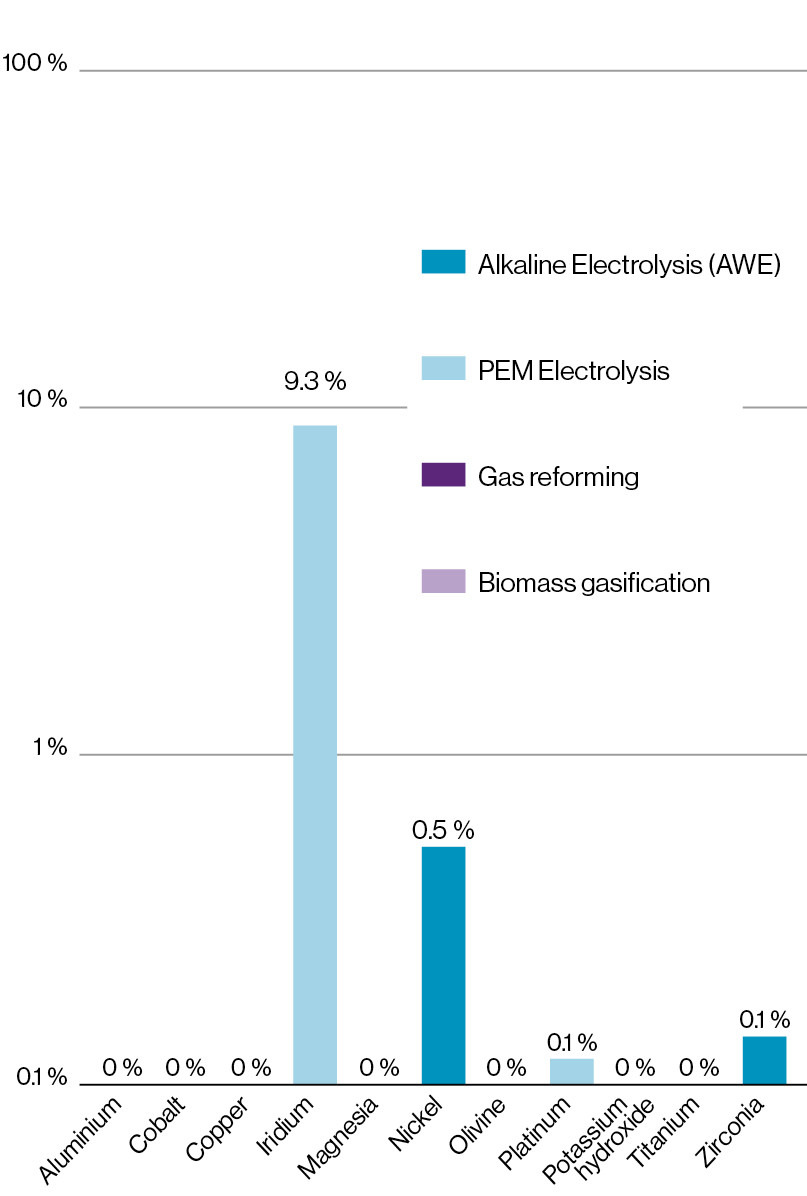
Annual demand for nickel, platinum and titanium is projected to be below today’s global mine production for the year 2050. “In addition to annual raw material demand, however, cumulative resource consumption is especially decisive,” emphasizes Professor Ulf-Peter Apfel, head of the Power-to-Chemicals department at Fraunhofer Umsicht. By 2054, the expansion of PEM electrolyzers in Europe alone is projected to lay claim to around 9.3 percent of estimated global iridium resources. Nickel accounts for 0.5 percent and platinum for 0.1 percent of global resources (see graphics p. 29).
Iridium is one of the rarest elements
“Estimates suggest that only around 2,000 metric tons of iridium exist worldwide in total,” Professor Apfel reports. For comparison: for nickel, the figure is 130 million metric tons. Iridium, he explains, is currently extracted almost exclusively as a by-product of platinum mining and is thus directly coupled to its production volume. At current platinum prices, mining is not economically viable and mines are already being operated at a loss. Supply bottlenecks up to and including structural supply shortages are therefore considered likely for iridium; but there is also a risk of future bottlenecks for platinum in the overall system.
In particular with a view to an expansion of PEM electrolysis capacity for the production of green hydrogen, it is assumed that demand for iridium will reach up to 1,250 percent of 2023 mine production by 2045. This is the conclusion of the study Raw Materials for Future Technologies 2026 (Rohstoffe für Zukunftstechnologien 2026), commissioned by the German Mineral Resources Agency (Deutsche Rohstoffagentur). Intensive efforts are therefore required to use PEM electrolyzers for as long as possible and to efficiently recycle the raw materials they contain in order to avoid supply bottlenecks.
Among the raw materials, nickel and zirconium are particularly critical in alkaline electrolysis. In PEM fuel cells it is mainly platinum, and in PEM electrolysis titanium is added in addition to iridium. In solid oxide electrolyzers and fuel cells, nickel, zirconium, strontium and the rare earths yttrium and lanthanum are especially critical.
Which components are recovered?
Since PEM technology has the highest level of maturity, the first industrial recycling processes are emerging for this technology. “Recycling focuses on the most valuable stack components. In the case of PEM electrolysis, around 48 percent of stack costs are attributable to the precious metal catalysts iridium and platinum, while titanium accounts for 32 percent of the costs,” Apfel explains.
Industrial recyclers such as Heraeus Precious Metals and Umicore already accept complete stacks, membrane electrode assemblies (MEAs) and production waste for precious metal recovery. Heraeus offers a hydrometallurgical process in which platinum, iridium, ruthenium and palladium are chemically dissolved and subsequently separated from one another and refined into high-purity precious metals. Umicore relies on the recycling of fuel cell stacks using pyrometallurgy. In this process, the components containing precious metals are melted down and subsequently refined.
© Fraunhofer UMSICHT / NEONBOLD
Why isn’t more being recycled?
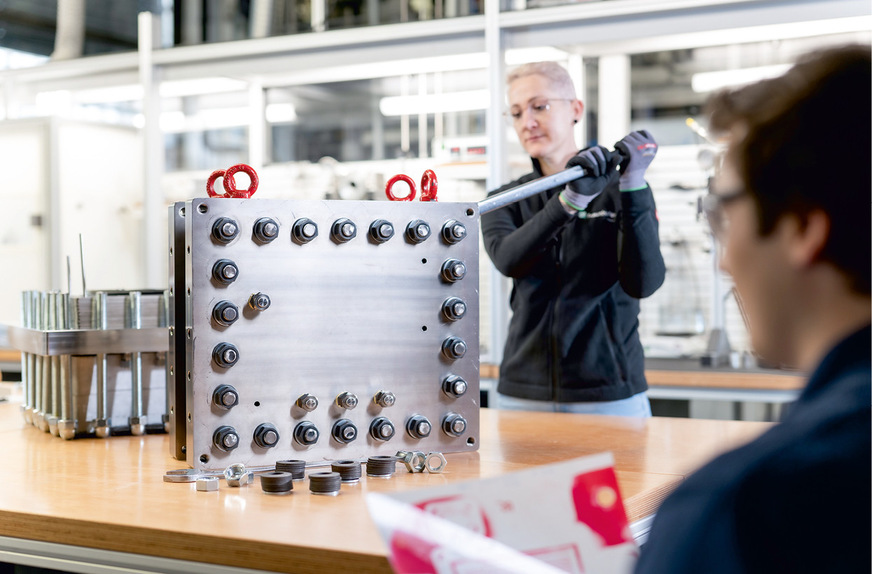
There are currently several challenges that stand in the way of efficient recycling. “A fundamental problem is that stacks have so far been designed primarily for performance and efficiency and not for easy disassembly and recyclability,” says Dr. Kevinjeorjios Pellumbi, senior scientist at Fraunhofer Umsicht. As a result, the disassembly of the compressed stack structures is particularly complex; numerous individual cells, seals, bipolar plates and MEAs have to be separated.
“Corrosion and deposits caused by operation additionally complicate low-damage disassembly,” the scientist illustrates. In addition, the composite material of the MEA represents a central challenge. In the case of PEM electrolysis, for example, iridium and platinum catalysts are firmly bonded to the Nafion membrane. That is a problem. Hydrometallurgical and pyrometallurgical processes are designed to recover the precious metals and destroy the Nafion membrane. They are also energy- and chemical-intensive, and thus disadvantageous from an environmental perspective.
Fluorine in particular, as a component of PEM fuel cells and electrolyzers, is problematic in terms of health and ecology, Pellumbi explains. A gentler separation while preserving the membrane would therefore be desirable, but this requires additional technical developments. “Ultimately, current precious metal recovery is predominantly raw material recycling, i.e., the stack is first chemically or thermally broken down and the precious metals are then refined in a manner similar to how they are refined from an ore.” A direct return into new catalysts, and thus true closed-loop recycling, is therefore not provided.
Recycling streams mostly from waste
The hydrogen industry has thus not yet reached the end-of-life point. According to Pellumbi, the systems are still in operation or are only now being developed and scaled up. Today’s recycling streams therefore come predominantly from production waste, reject parts and defective stacks. If these are not fed into industrial processes for the recovery of the precious metals, they can instead be used as starting materials for research projects investigating future circular concepts.
A cornerstone for the build-up of the German hydrogen industry was laid by the hydrogen lead projects of the German Federal Ministry of Education and Research (BMBF). With the recycling project ReNaRe, questions of recyclability were already addressed in H2Giga. Current research projects, in which Fraunhofer Umsicht is also involved, place a clear focus on recycling and circularity: CircuPEM is developing a holistic concept for circular product and process design in PEM electrolysis, while RoboCircEL is implementing automated disassembly and chemical recycling of end-of-life PEM electrolyzers.
The goal of RoboCircEL is the complete circularity of the materials from end-of-life PEM electrolysis stacks. For this purpose, tailored recycling methods are specifically adapted to different degradation states of the stacks, and chemical separation processes with solvents that are as mild and environmentally compatible as possible are investigated. Aggressive acids or thermal decomposition are to be avoided as far as possible in order to reduce environmental impact and to recover, in addition to the precious metals, further materials such as the membrane.
© Fraunhofer UMSICHT, Mike Henning
PEM Circle works with digital twin
At least intensive work is already being done on the topic of recycling. In March 2026, the partners came together for the launch of the research project PEM Circle at the Fraunhofer Institute for Manufacturing Engineering and Automation (IPA) in Stuttgart. The project is funded by the German Federal Ministry of Research, Technology and Space (Bundesministerium für Forschung, Technologie und Raumfahrt, BMFTR). Together with the German Aerospace Center (DLR), the aim is to develop digital solutions in order to use PEM electrolysis stacks more circularly over their entire life cycle, from repair through remanufacturing to recycling. In terms of content, component-specific sensor technology, a forecasting tool for remaining service life and digital twins are combined with ecological and economic assessment approaches. The researchers aim to enable data-based decisions for the circular economy and thus to keep critical raw materials such as iridium and platinum in the loop. The old adage applies: better to have iridium, platinum, titanium and nickel than to need them. The final report of PEM Circle is expected in early 2029.
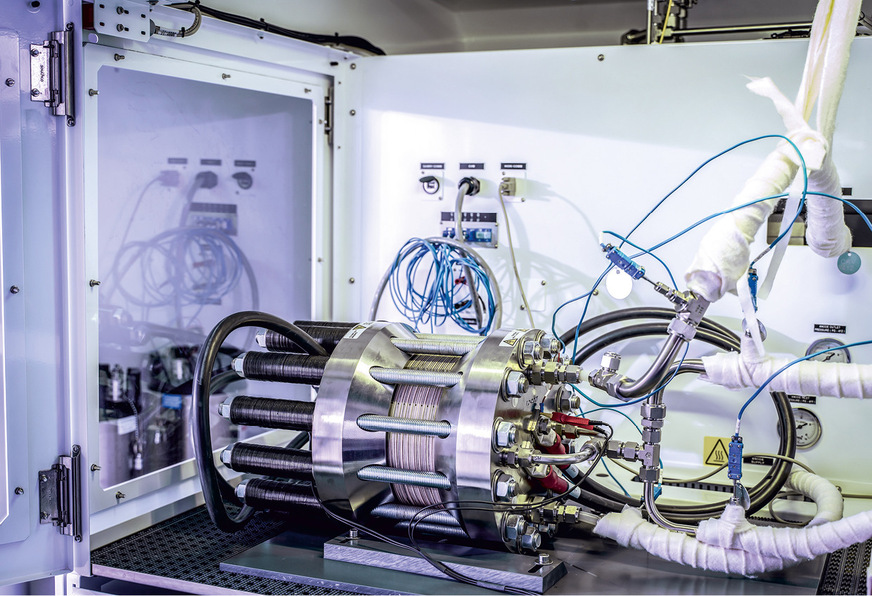
© Fraunhofer UMSICHT
Disassembly processes mostly manual
At present, there are only a few electrolyzers slated for recycling, Dr. Ludwig Jörissen, head of fuel cell research at the Center for Solar Energy and Hydrogen Research Baden-Württemberg (ZSW) in Ulm, also knows. In addition, the design variants are still very diverse. “Accordingly, disassembly processes and the separation of composites are predominantly characterized by manual labor and are correspondingly time-consuming.”
A general answer to the question of what happens to used electrolyzers today is hardly possible. “High-quality components such as precious metals or metallic structural materials can be fed into the regular recycling processes after disassembly. Polymers are generally thermally utilized,” the ZSW researcher explains.
In addition to the purely thermal utilization of plastic waste from the electrolysis industry, for example cell frames from the electrolysis stacks, processes for raw material recycling are also under development. One example is the research project CarbonCycle, funded by the German Federal Ministry of Economic Affairs and Energy (BMWE), in which ZSW is developing a pyrolysis process together with industry partners, with which it will be possible in the future to convert plastic waste into high-quality carbon materials that can be used, for example, in the production of lithium-ion or sodium-ion batteries. Jörissen: “In this way, import dependencies, for example on graphite from China, can also be reduced.” That would at least mean one less Achilles’ heel.
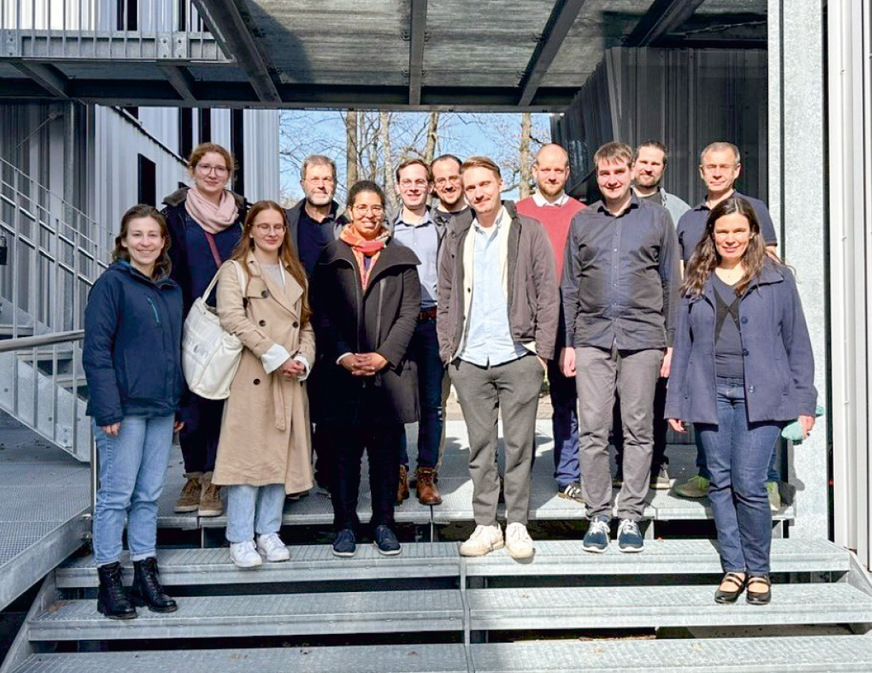
© PEM Circle
Raw material demand for electrolysis and stationary fuel cells could exceed global production of individual metals many times over by 2045. This is shown by an updated study of the German Mineral Resources Agency (DERA). Particularly affected:
iridium, scandium and platinum.