

© Created with Google AI
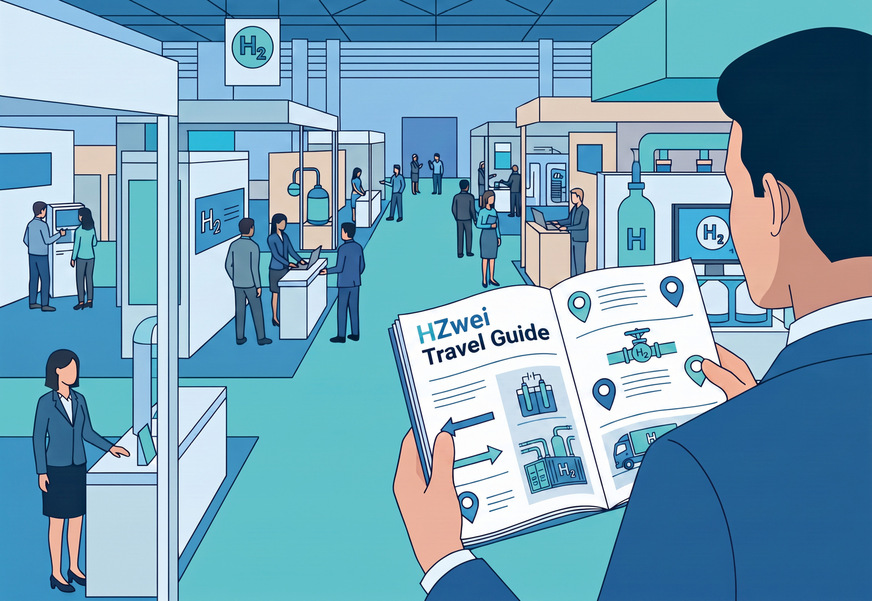
Do you already know which booths you want to visit at the hydrogen trade fair in Hamburg? Planning a trade fair visit can be tedious. That is why our editorial team has pre-sorted things for you and presents the trends and innovations here in the magazine in compact form, and in more detail in our newsletter. From the electrochemical core of the cell through the often underestimated periphery to tangible fields of practical application: with the H2international (H2int.) Travel Guide, you will more quickly find the innovations that are important to you.
Practical tip on booth numbers
The hydrogen section of the fair is located in halls B5, B6 and B7. The booth numbers given by the organizer start with the hall number without the “B.” So the “B” in 7B30 refers to aisle B in hall B7, and there you will find the German Hydrogen Association (Deutscher Wasserstoffverband) as well
as H2int.
Eva Augsten
Monika Rößiger
Mariana Nahirna
H2int. at the trade fair
The team from Gentner Energy Media is of course also represented at the leading hydrogen trade fair. H2int. editor-in-chief Eva Augsten, deputy editor-in-chief Monika Rößiger and Mariana Nahirna from Media Sales will be out and about on the fairgrounds. We will be supported at times by Nicole Weinhold, editor-in-chief of our sister magazine Erneuerbare Energien, and Fabian Kauschke, editor for Erneuerbare Energien.
As a co-exhibitor, we have our "headquarters" at the booth of the German Hydrogen Association (Deutscher Wasserstoffverband, DWV) e.V. at booth 7B30.
Tanaka: catalysts, membranes and recycling processes
Tanaka Precious Metal Technologies is participating in the Hydrogen Technology World Expo in Hamburg for the first time. The focus of its trade fair presentation is on precious metal technologies for hydrogen production, gas purification and precious metal recycling. The precious metals platinum (Pt), palladium (Pd), iridium (Ir), rhodium (Rh) and ruthenium (Ru) are indispensable for many hydrogen technologies and a significant cost factor. Using them sparingly and recycling them is therefore essential.
Tanaka’s expertise covers electrode catalysts for fuel cells and electrolyzers, various catalysts beyond cell stacks (for example for steam reforming, for shift reactions, for exhaust gas treatment), hydrogen-permeable membranes and plated electrodes, as well as the recovery and processing of precious metals from hydrogen technologies.
Booth 7J54
APJeT brings plasma processes for GDL and PTL coatings
APJeT Plasma Technologies is new to the hydrogen industry. At the trade fair, the company is showing a new coating and curing process for gas diffusion layers and porous transport layers. The technology combines the water-repellent coating GreenFIX-GDL with the plasma curing APCure. The coating is intended to encase the fibers of the base material without blocking its pores. According to APJeT, the APCure equipment can cure the GreenFIX chemicals directly at room temperature and atmospheric pressure, thus saving time and energy.
Booth 7G60
Bekaert: new functional layer for PEM electrolyzers
With the Currento Microporous Layer, or MPL for short, Bekaert is presenting an additional functional layer for PEM electrolyzers. The microporous layer is applied to the porous transport layer substrate. The layer is intended to establish particularly uniform contact conditions between the cell components, support ultrathin membranes and increase operational stability under demanding conditions. In addition, lower iridium loadings and higher operating current densities should become possible.
Booth 6J76
Metacon: new electrolysis stacks from PERIC
The Swedish company Metacon AB, together with the state-owned Chinese research institute PERIC Hydrogen Technologies, is bringing a new generation of pressurized alkaline electrolysis stacks to the European market.
The new stack design is said to have an operating current density up to 17 percent higher than the previous reference design. At the same time, the weight of the cell plates is to be reduced by up to 13 percent. The stacks are also intended to be suitable for flexible power ratings. Metacon plans to use the technology in its current and future commercial projects. According to Metacon, PERIC produces electrolysis stacks with up to 15 MW of capacity, although the 5 MW class is currently the common one in the industry. According to its own information, PERIC has an annual production capacity of around 6.5 GW.
Booth 7C27
No stack works without its functional periphery: only the interplay of precise media supply, exact pressure control, modular automation and downstream gas purification turns an electrochemical cell into an industrially manageable overall system.
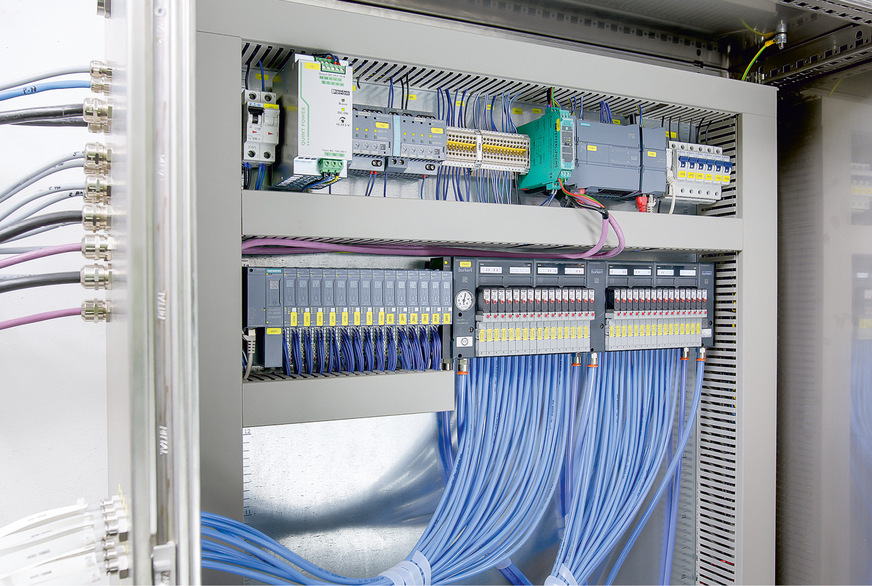
© Bürkert
Bürkert: fluidic solutions for scaling hydrogen applications
Bürkert Fluid Control Systems is presenting intelligent fluidic solutions that are necessary for stable processes in electrolyzers, fuel cells, test benches and H2 infrastructure.
Intelligent valve islands, communication-capable components and preconfigured system solutions enable end-to-end process automation and support the digitalization of hydrogen-based applications. For demanding operating conditions, solutions for dry and humidified gases as well as ATEX-compliant components for potentially explosive areas are also available.
For electrolyzers, Bürkert offers, for example, solutions for ensuring the quality of the feed water, for continuously monitoring the ultrapure water and for providing stable pressure conditions on the anode and cathode side. For stable plant operation, Bürkert offers solutions for safe shut-off of hydrogen, oxygen and liquids as well as energy-efficient cooling and temperature control systems.
For fuel cells, Bürkert offers precise fluidic solutions for the controlled supply of hydrogen and air as well as for the reliable regulation of pressure and volume flows. The control of purging and drainage processes and the regulation of recirculation circuits are also part of Bürkert’s range.
Booth 6J50
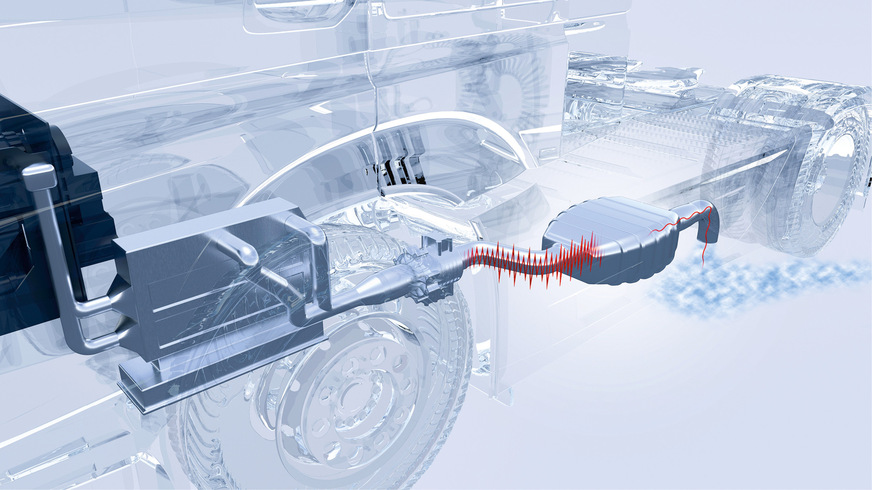
© Purem
Purem by Eberspächer: de-hydrator for fuel cell exhaust air
At the Hydrogen Technology World Expo in Hamburg, Purem by Eberspächer is showing, among other things, the de-hydrator. This reduces the moisture content in the exhaust air of fuel cell systems and thus reduces visible vapor formation. The component complements the modular exhaust air system consisting of a water separator (which removes water from the cathode path) and a silencer for intake and exhaust systems of fuel cell vehicles and systems. It is also intended to improve operational safety.
The second focus topic is the direct air capture system for separating CO2 from the ambient air.
Booth 7C39
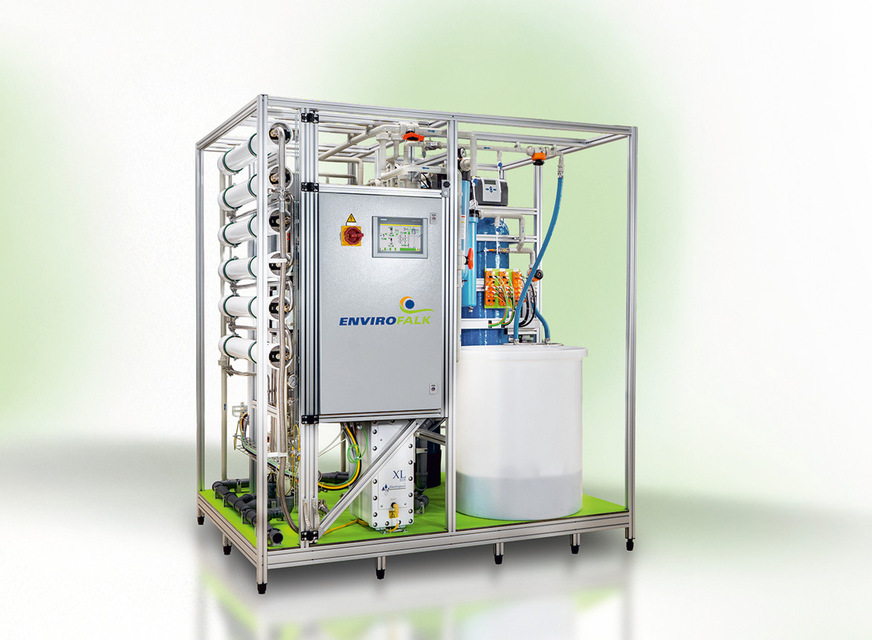
© Envirofalk
Envirofalk: ultrapure water for electrolyzers up to 100 MW
The water technology company Envirofalk has expanded its Envigreenpure PtX product platform. Until now, the series for ultrapure water supply for power-to-X applications (PtX) has covered capacities of up to 5 megawatts (MW). The portfolio now also includes standardized designs for 20 MW, 50 MW and up to 100 MW. According to the company, this makes it possible to realize projects in the capacity range between 2.5 and 100 MW on a uniform technological basis.
Die Reinstwassersysteme sind für verschiedene Elektrolyseverfahren ausgelegt wie alkalische Elektrolyse (AEL), die Anionenaustauschmembran-Elektrolyse (AEM) sowie die Protonenaustauschmembran-Elektrolyse (PEM). Ein modulares Konzept ermöglicht dabei die Anpassung an unterschiedliche Rohwasserqualitäten und Standortbedingungen.
Booth 7D39
Omega Air: hydrogen purification in a container
With the H2 BOX, Omega Air is presenting a containerized complete system for hydrogen purification. It is intended for applications that permanently require consistent hydrogen quality.
The system continuously removes water vapor, oxygen and solid particles from the hydrogen stream. It can be integrated, among other things, into electrolyzer systems and, according to the company, is also suitable for fuel cells, hydrogen refueling stations as well as chemical and petrochemical processes. A DeOxo unit is optionally available, which is intended to reduce the oxygen content to below 5 ppm.
Booth 6J05
© Murrelektronik
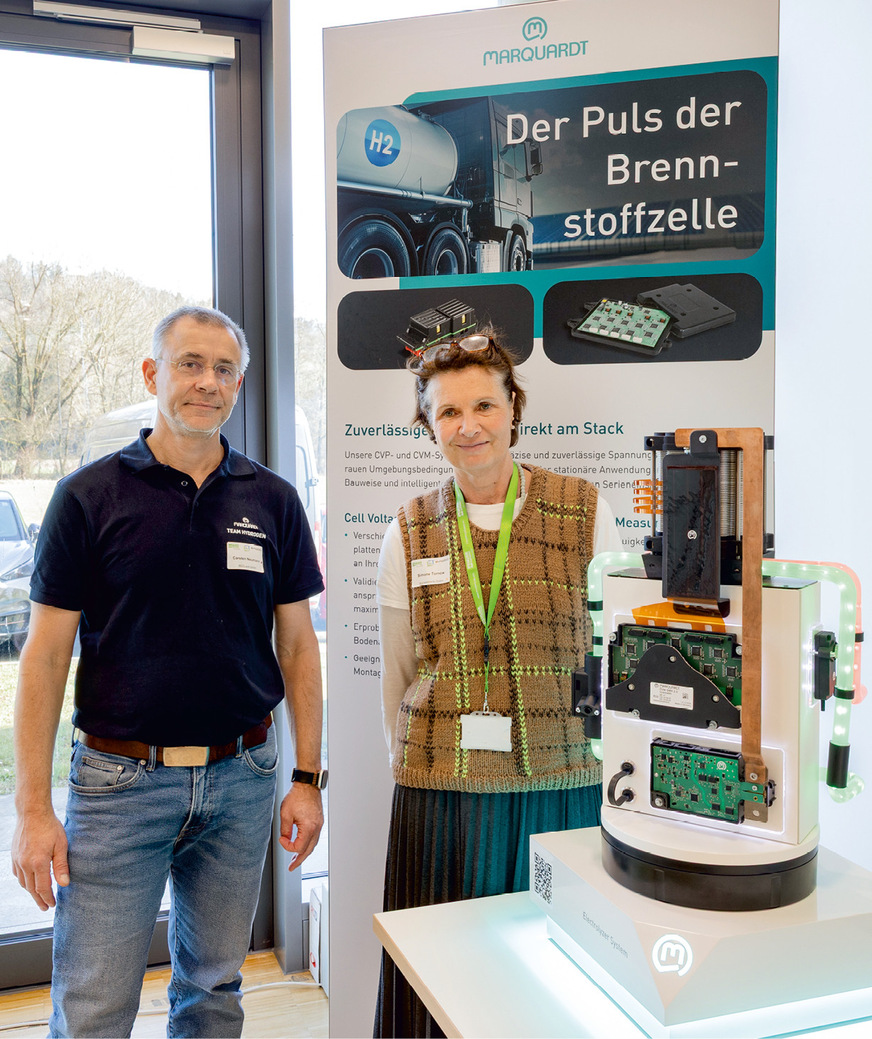
Marquardt and Murrelektronik: decentralized automation meets stack monitoring
The automation specialist Murrelektronik and the Marquardt Group, which comes from the automotive sector, are placing their new cooperation at the center. They are showing a joint approach to the automation and monitoring of modular hydrogen systems. The focus is on combining measurement and safety technology near the stack with decentralized distribution of energy, signals and data.
Marquardt is contributing components from its hydrogen and energy management portfolio for this: Cell Voltage Monitoring continuously monitors cell voltages and can thus make anomalies in the stack visible at an early stage. It is complemented by the Cell Voltage Pick-Up for contacting bipolar plates, a high-voltage sensor for current and voltage measurement, and an H2 leakage sensor. The latter detects hydrogen concentrations from 0 to 4 percent by volume and is, according to the manufacturer, designed, among other things, for electrolysis plants.
Murrelektronik relies on the decentralized automation platform Vario-X. Control, sensor and actuator functions are integrated closer to the process, which is intended to reduce central control cabinet structures and wiring effort. For manufacturers of modular electrolyzers and for operators of growing plant fleets, this is relevant above all with regard to installation, scalability, commissioning and service.
The cooperation follows a co-creation approach: according to their own statements, both companies are working on interfaces, hardware and software integration, as well as on transferring experience from the automotive and industrial automation sectors to hydrogen applications. At the joint booth, it is intended to show how measurement data from the stack and the plant can be integrated into an end-to-end, scalable automation architecture.
Booths 6M40A and 6M40B
© Festo
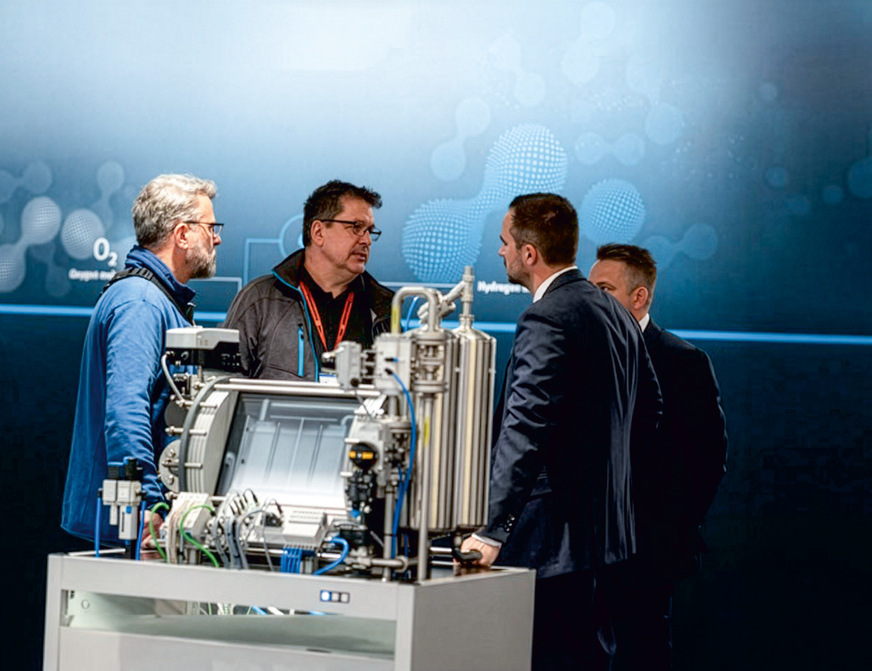
Festo: modular automation for hydrogen skids
In Hamburg, Festo is showing solutions for automating hydrogen plants in a modular and process-oriented way. The focus is on the CPX-AP-I remote I/O system. It integrates automation components such as the VTUG valve island, individual valves and sensors in a decentralized manner directly in the plant environment. This reduces wiring effort and control cabinet sizes for electrolyzers, gas purification stages such as PSA and skids. In addition, the company is presenting preconfigured system solutions with a focus on explosion protection and functional safety, in order to minimize interfaces during ramp-up to industrial scale.
Booth 6L40
WEH FluidTech: components for high-pressure systems
WEH FluidTech is expanding its hydrogen portfolio with new solutions for refueling, infrastructure and testing processes in the high-pressure range.
New at WEH is, for example, the TK200 H2 fueling nozzle for refueling vehicles. It combines field-proven technology with greater ease of use and modern design. The single-handed nozzle with push-and-pull locking is designed for flow rates of up to 90 grams per second and is available in the H35, H35MF and H70 versions. For applications with particularly high hydrogen throughput of up to 300 grams per second, the new hydrogen high-flow fueling nozzle TK500 H70HF is added. The likewise new TW850-S50 and TW850-S60 H2 quick adapters enable safe and fast connection of hydrogen containers.
Booth 6G55
Research institutes are also showing innovations at the hydrogen trade fair. These involve technologies as well as service offerings.
ZBT: tests for PEM electrolyzers up to 40 kW
The Center for Fuel Cell Technology, ZBT (Zentrum für Brennstoffzellentechnik), has commissioned a new 40 kW test bench for PEM water electrolysis. Customers can use the institute’s test benches, among other things, to investigate performance, efficiency, aging and degradation mechanisms.
PEM electrolysis stacks can be tested on the test bench with capacities of up to 40 kW and currents of up to 2,000 A. Long-term tests of up to 5,000 operating hours under application-oriented conditions are also planned.
Booth 5B40
Fraunhofer LBF (GreenMat4Hy): reality check for pipelines and plasma pyrolysis
The Fraunhofer Institute for Structural Durability and System Reliability LBF in Darmstadt, part of the Fraunhofer Performance Center for Hydrogen in Hesse (GreenMat4Hy), is devoting itself to the retrofitting of existing gas networks.
Thin internal coatings are intended to reduce direct contact between hydrogen and steel, thus preventing the feared hydrogen embrittlement. Fraunhofer LBF is developing methods to evaluate the adhesion, durability and service life of these coatings under realistic loads, and to make better investment decisions. A section of pipeline can also be seen at the trade fair.
The Fraunhofer Research Institution for Materials Recycling and Resource Strategies IWKS in Hanau is showing the model of a reactor for microwave-based plasma pyrolysis. The input materials can be, for example, plastic waste, oils or biogas. What is important is that hydrocarbons are present. With the help of the highly reactive microwave plasma, the substances are broken down without complex pretreatment. The result is hydrogen, synthesis gas and high-quality carbon. According to Fraunhofer, CO2 is not produced in the process itself.
Booth 6B25
How the hydrogen technologies become a common ecosystem is shown in applications, platforms and practical projects.
© Tyczka
Tyczka: hydrogen producer presents its latest projects
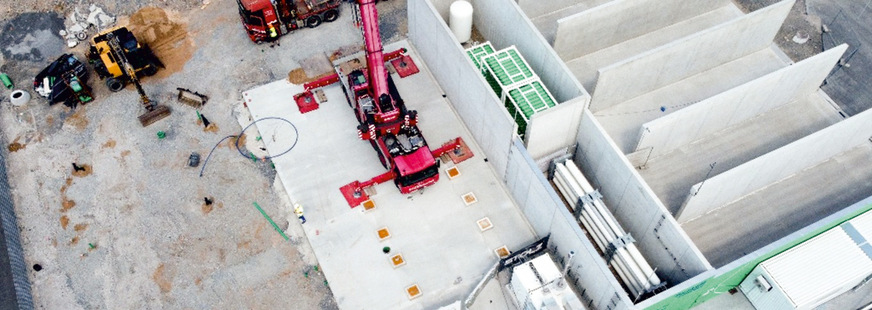
The hydrogen producer Tyczka covers the entire value chain from production through compression and filling, transport and logistics to filling and application technology. At the trade fair, Tyczka is focusing on three current projects.
In May 2026, Tyczka opened the Schweinfurt-Hafen hydrogen refueling station. It is intended to become the core of the Tyczka H2 hub. It has a capacity of 1,000 kilograms of hydrogen per day. In the fourth quarter of 2026, the commissioning of a 6 MW electrolysis plant is to follow at the same site. It is expected to be able to deliver about 600 metric tons of hydrogen per year. RFNBO certification is in preparation.
The 5 MW electrolysis in Hünfeld near Fulda has already been in operation since 2025. The plant in the logistics park on the A7 highway, with a capacity of 500 metric tons of hydrogen per year, was built by Abo Energy and taken over by Tyczka in August 2026. It has two trailer filling facilities with 200 and 300 bar as well as two dispensers for 350 bar. The electrolysis plant also has RFNBO certification.
Booth 6M48
EODev and Baudouin: SOFC power supply
EODev and Baudouin want to jointly bring stationary power supply based on solid oxide fuel cells, or SOFCs for short, to the industrial market. Targeted applications are data centers, industrial sites and critical infrastructure. Each standard system is to deliver 600 kW; several units can be combined for applications in the multi-megawatt range. The SOFC systems are to be able to run on natural gas, renewable gases or hydrogen, and to deliver electricity and heat.
Booth 6G4
© Hyfindr
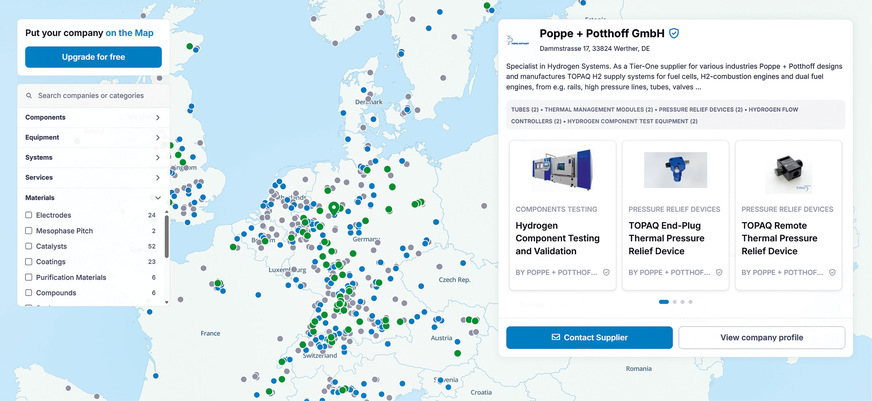
Hyfindr: world map of the hydrogen economy
The hydrogen B2B marketplace Hyfindr has developed a Hydrogen Supplier World Map. It shows more than 1,200 suppliers of hydrogen technologies, filterable and with detailed information on each supplier. From electrode materials to the complete hydrogen refueling station, everything can be searched for and found here. Registration on the map with a basic entry is free, as is its use. Those who want to query details about the companies, however, must create an account.
Booth 5E60