

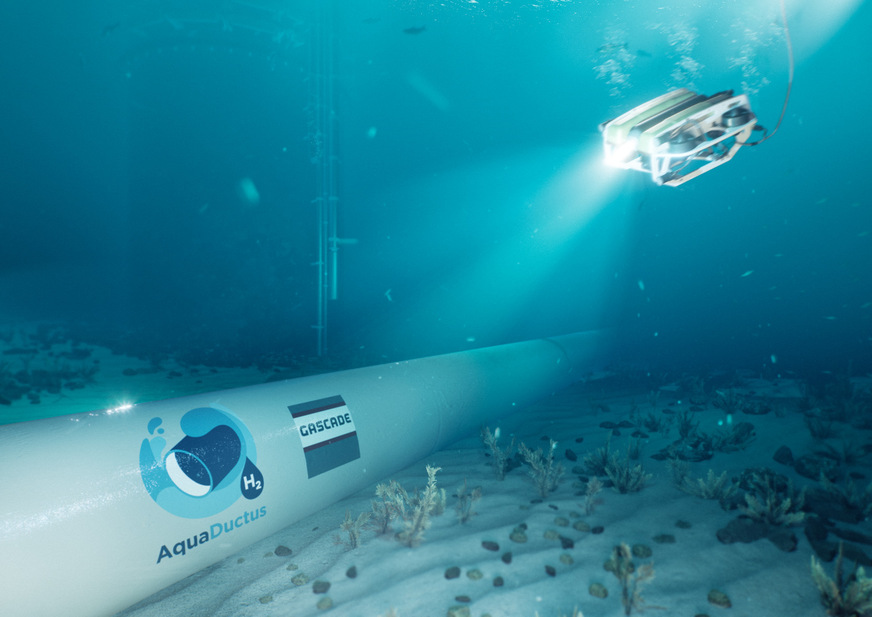
AquaDuctus Pipeline GmbH, based in Kassel, is preparing to build a hydrogen import pipeline in the German North Sea. Once the necessary permits are obtained, the geotechnical investigations in the planning corridor are expected to begin at the earliest from July 20, 2026, according to the company. The company describes this step as a milestone for the further technical and environmental development of the project.
Geotechnical and Geophysical Analyses at Norderney
The investigations will take place in front of and on the island of Norderney as well as in front of Hilgenriedersiel. Geotechnical and geophysical analyses are planned to determine the soil and subsoil conditions along the planned route. These will be conducted both at sea and in the coastal area. The data obtained will form the basis for determining the route and selecting suitable construction methods, as well as for the safe and environmentally friendly implementation of the pipeline project.
According to the company, the work will be carried out predominantly with minimal intervention using various measurement methods. Only at a few specifically selected points are small sample extractions planned, for example, to determine the load-bearing capacity of the subsoil. Aspects of environmental and water protection will be comprehensively considered, AquaDuctus reports.
“By carrying out these ground investigations, we are taking the next important step towards realising AquaDuctus,” says Sven Becker, Managing Director of AquaDuctus Pipeline GmbH. “It is important to us that these investigations are carried out as carefully and efficiently as possible,” Becker continues. “At the same time, they provide the foundation for the further planning needed to implement the project safely and responsibly.”
Import Corridor North Sea and Connection to SEN-1
With AquaDuctus, the operating company aims to develop the German North Sea as a central import corridor for hydrogen. The pipeline is intended to create the conditions for connecting offshore hydrogen production projects to the mainland. According to the company, this also includes the energy generation area SEN-1. AquaDuctus is thus set to become a building block for the development of a hydrogen infrastructure in Germany and Europe. (The offshore H2 production project AquaVentus was the subject of a detailed report in H2int 2025-05.)
IPCEI Status and Part of the Hydrogen Core Network
The project is classified as an “Important Project of Common European Interest” (IPCEI) as well as a “Project of Common Interest” (PCI). It is supported by the Federal Government and the State of Lower Saxony. Additionally, the pipeline is part of the hydrogen core network confirmed by the Federal Network Agency (Bundesnetzagentur), which is intended to form the basis of a nationwide hydrogen infrastructure.
The project sponsor of AquaDuctus is AquaDuctus Pipeline GmbH, based in Kassel. The company is a wholly-owned subsidiary of the transmission system operator Gascade Gastransport.
Gascade