

On June 3, 2026, the German Federal Government’s coordinator for the Maritime Economy and Tourism, Christoph Ploß, visited Hamburg University of Technology (TUHH) to learn about the results of a project on the production of hydrogen at sea.
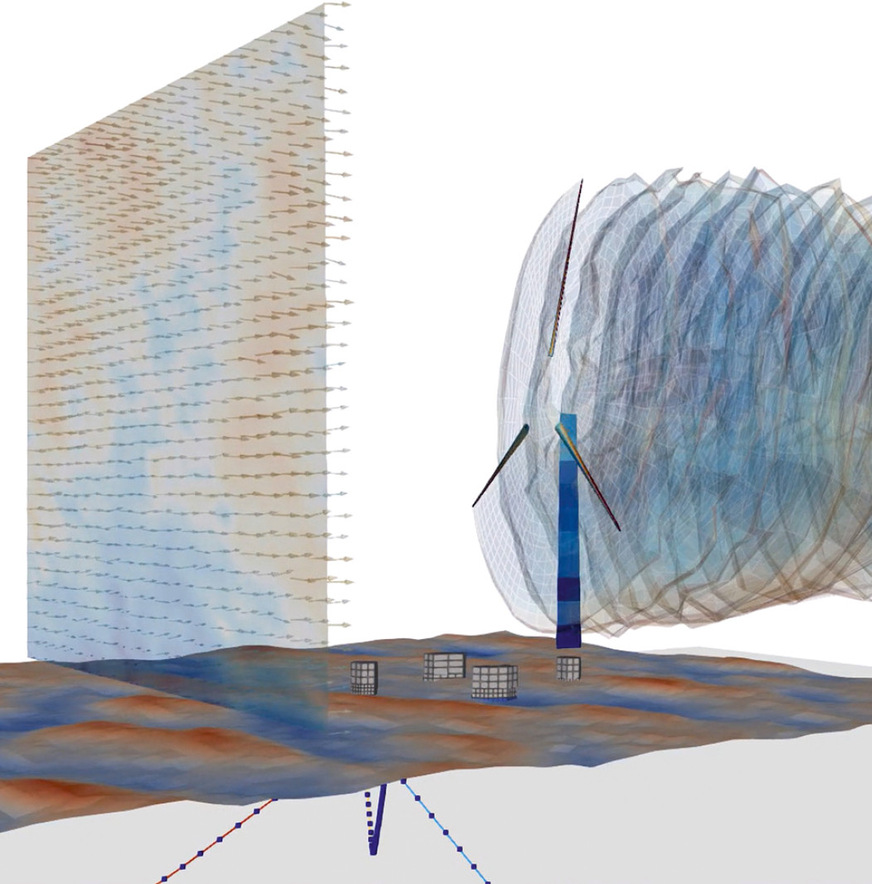
Together with industry and research partners, TUHH has developed a floating, self-sufficient offshore electrolysis plant in the ProHyGen project. The hydrogen produced is to be stored without pressure in a liquid organic hydrogen carrier medium (LOHC). The German Federal Ministry for Economic Affairs is funding ProHyGen with around 1.5 million euros (see H2international 2026-2).
The project partners include Cruse Offshore GmbH, the Chair of Chemical Reaction Engineering at Friedrich-Alexander University Erlangen-Nürnberg (FAU), Renk GmbH, and H&R GmbH & Co. KGaA. The plant is intended for sea areas outside the sites of conventional offshore wind farms.
Since the plant produces and consumes its own energy, there is no need for a grid connection, transformer platforms, or subsea cables. The hydrogen is stored temporarily in the “liquid battery storage” LOHC and transported by shuttle tanker via the existing oil infrastructure to the off-taker. According to the calculations, the current purchase price for industry there would be around 5.50 euros/kg H2 (IRR 17.9%).
These characteristics apparently impressed the Maritime coordinator. The concept not only significantly reduces the effort for planning and construction, but also lowers investment costs. “At the Dogger Bank offshore wind farm, for example, around 50 percent of the investment costs (CapEx) are attributable to the power grid connection. In our concept, this cost block is completely eliminated,” explains project manager Jens Cruse. “In the sea areas we have selected, wind power can be generated almost around the clock, so that the electrolyzer will be utilized accordingly.” This, together with the absence of a grid connection, would also “drastically reduce” operating costs (OpEx).
The floating wind-power-to-hydrogen factory is anchored using conventional mooring lines. “The concept is scalable and does not compete for space with other wind or solar installations,” Cruse emphasizes. “We also don’t need an H2 core network, because transport is to take place via the well-developed inland waterway network in Germany and Europe.” This network links H2 hubs such as Hamburg, Rotterdam, Duisburg, Ludwigshafen, and Antwerp-Bruges. In addition, potential off-takers such as the steel and chemical industries as well as refineries are already located there.
Off-takers can be supplied via a “deposit-bottle system for hydrogen,” as Andreas Bösmann of FAU explained. “The LOHC carrier liquid can be loaded and unloaded with hydrogen for around 3,000 cycles before it has to be replaced.” And: “The heat released during hydrogenation is sufficient to desalinate the seawater so that it can be used for electrolysis.”
Thorsten Ronner of the Heinrich Rönner Group said that once central components such as turbines, electrolyzers, and prefabricated steel parts are delivered, a consortium of German shipyards would be able to assemble around 50 to 100 units per year in series production. With an output of 15 MW per plant, this would correspond to an installed capacity of up to 1.5 GW per year.
In the project, which runs until the end of 2026, the Hamburg researchers and their partners have completed the planning of a 5 MW prototype as well as its scaling to 15 MW. Preliminary planning and a feasibility study for a hydrogen park in European sea areas are also available. As a next step, the participants aim to build a first prototype. They discussed possible implementation paths at the expert meeting with Christoph Ploß and industry representatives. Investors are welcome. Monika Rößiger
Cruse-Offshore