


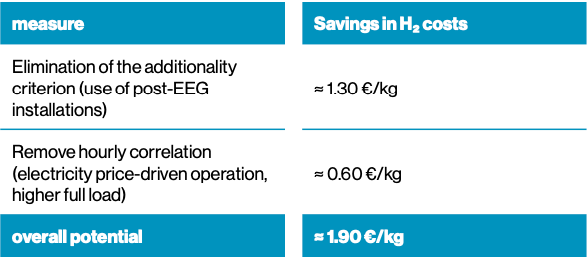
The Delegated Act of the European Union on renewable hydrogen (RFNBO) is facing a crucial test. The well-intentioned criteria for “additionality” and “hourly correlation” lead, in the analyzed reference scenario, to additional costs of around €1.90/kg of hydrogen. At the same time, the results show no improvement in the systemic CO2 impact. In fact, hourly correlation even worsens it compared to monthly correlation.
The current situation presents a paradox
While the EU’s climate targets remain ambitious, the implementation level significantly complicates their realization. The hydrogen ramp-up is in a critical phase: on the one hand, pilot projects are emerging across Europe and initial investment decisions are being made. On the other hand, the regulatory framework threatens to become a stumbling block. However, Enertrag is convinced that the hydrogen ramp-up works in practice. The key now is to remove these obstacles and allow for more flexibility in the system.
As is well known, the additionality criterion requires that the electricity used for electrolysis must come from new, unsubsidized renewable energy plants that serve the production of RFNBO (Renewable Fuels of Non-Biological Origin) and go into operation from January 1, 2028.
More expensive electricity procurement for operators
Electrolyzer projects must therefore economically support the construction of new renewable energy plants. As a consequence, this creates a structural competitive disadvantage compared to the Renewable Energy Sources Act (EEG). Plant operators therefore prefer the EEG with its long-term, low-risk revenues. This increases the cost of electricity procurement for electrolyzers.
The criterion of non-subsidization means that even unsubsidized electricity from an EEG plant may not be used. This makes it impossible to use part of the electricity generated by renewable energy plants with a subsidized tariff in a system-friendly way. If a wind turbine produces more than its subsidized amount in certain hours or feeds in during hours with negative prices, this electricity remains off-limits for hydrogen production.
Without the criteria of additionality and non-subsidization, existing plants (especially post-EEG plants) could be used, opening up a new market for de-subsidized plants. The resulting cost savings would amount to approximately €1.30/kg of hydrogen.

Even more complicated in the future
From 2030 onward, the Delegated Act requires an hourly correlation between renewable electricity generation and the electricity consumption of an electrolyzer. This means that the electrolyzer may not consume more electricity per hour than the assigned renewable energy plants generate.
This prevents an electricity price-driven operation of the electrolyzer and leads to fewer full-load hours or more frequent part-load operation. The portfolio effect of the national renewable energy mix is lost. This is particularly unfavorable for the energy system as a whole, because the electrolyzer is then operated more frequently during hours with higher CO2 intensity.
Reality-based facts
Enertrag analyzed various operating scenarios based on a 10 MW electrolyzer with flexible hydrogen sales, a wind farm with approximately 2.5 times the capacity, and a direct line to the electrolyzer. The reference year was 10/2024 bis 09/2025.
As the first table shows, the additionality criterion is the biggest cost driver. And the hourly correlation worsens both the costs and the systemic CO2 impact.
Absurd: costs and emissions rise
In addition, hourly correlation leads to a systemic emission impact that is around 25 g CO2/kWh higher than monthly correlation. This contradicts the actual objective of the regulation and also leads to an increase in price of €0.60/kg of hydrogen.
Enertrag has been operating an electrolysis plant in the Uckermark region since 2011. This hydrogen plant is part of the Enertrag Verbundkraftwerk®. It impressively demonstrates how sector coupling works in practice: with around 600 MW of installed capacity from wind and solar power, we operate several hundred interconnected plants within a 25-kilometer radius. A battery storage system in Cremzow with 22 MW / 34.8 MWh is used for peak load coverage. The hybrid power plant is capable of taking over key system functions of a conventional power plant.
The hydrogen ramp-up works
Due to increasing demand, Enertrag is planning to build additional electrolysis capacity at two sites in the Federal States of Mecklenburg-Western Pomerania and Brandenburg, with a total capacity of around 185 megawatts.
Based on our many years of practical experience, we call for the abolition of the additionality and non-subsidization criteria at the EU level. Opening up to post-EEG plants would create new markets without competing with the EEG. In addition, the temporal requirements should be made more flexible to allow for monthly instead of hourly correlation.
A better way forward
As the second table shows, it makes a lot of sense to eliminate the criteria in favor of a price-driven and system-friendly operation. At the national level, the exemption from levies (offshore grid levy, CHP levy) should be extended to all plants commissioned after 2030. The price-setting criteria of §13k of the German Energy Industry Act (EnWG) (“use instead of curtailment”) should be revised to enable attractive market participation.
Accelerating the hydrogen ramp-up
What is needed now above all is reliability from policymakers. A retreat from the expansion targets for renewable energy or hydrogen would jeopardize the entire value chain. It is crucial to remove obstacles in market design. More flexibility in the system would already enable cost-efficient hydrogen production.