Catalysts made of platinum and iridium are still a cost driver in the hydrogen economy. Christian Mohrdieck took over as head of the catalyst manufacturer Pajarito Powder in April and is convinced that his company’s products can reduce the cost of fuel cells by one-fifth.
Interview: Eva Augsten
H2international: Mr. Mohrdieck, you bring 34 years of experience from major automotive corporations such as Daimler and Mercedes to Pajarito Powder, a manufacturer of catalyst materials with around 35 employees. What do you want to change in your new position as CEO?
Dr. Christian Mohrdieck: For me, it’s a shift from looking at the system level to the level of the core components. These need to be revisited for the next stage of commercialization. We have good ingredients, now it’s about the best recipe.
Pajarito Powder already has good products. But we need to adapt them more to the business and processes of the automotive industry and make them suitable for series production in order to get the optimum out of the core components as well.
And of course it’s no secret that networking is important. You have to talk to the right people on the customer side.
How much is there still to gain with the catalysts? Platinum quantities have already been reduced enormously.
A fuel cell system for a passenger car contains 10 to 20 grams of platinum, in a truck it is two to three times as much. Even today, the catalyst can account for more than half the cost of a fuel cell stack. I think that in the ideal case, we can reduce the cost of the stacks by 20 percent by saving 40 percent on the catalyst. This is primarily about using less platinum and better utilization.
By saving 40 percent on the catalyst, we could reduce stack costs by up to 20 percent.”
The platinum content varies depending on customer requirements. For a truck, one tends to use around 60 percent by weight, but practically no one wants to go below 40 percent by weight. The catalyst degrades over time. This means that high performance can initially be achieved with relatively little platinum, but then the fuel cell doesn’t last as long.
How do you reduce the platinum content in such a way that the cell still works well?
We use a mesoporous, i.e. medium-porous, carbon support material. It offers a large internal surface area on which platinum can attach without forming clumps. We also have a whole toolkit of additives and dopants, for example with niobium or cobalt, that can be used to improve activity.
What about iridium?
Iridium is even more expensive than platinum. In fuel cells, it is used when the cells need to be tolerant of cell voltage reversal, for example during a cold start or after longer downtimes. But above all, it is used in electrolyzers and accounts for a large share of the cost there, even more than platinum in fuel cells.
Can such scarce and critical materials as platinum and iridium not be replaced by others?
For platinum, the basic availability is good. Modern fuel cell cars ultimately need similar quantities of platinum as the exhaust catalysts of combustion engines. Iridium is more critical. However, there is no alternative in sight.
There is no alternative to iridium in sight, so we have to increase utilization.”
So we have to increase utilization. Our activity per mass for iridium is almost twice as high as the published values of our competitors. When transitioning to large-scale production, performance will probably decrease a little, but this will be offset by a boost in cost reduction.
Where do we stand in terms of scaling and industrialization?
With our new line, we can produce batches of up to 20 kilograms, of which up to 60 percent by weight is platinum. The potential customers now want to see how the line runs.
We are on the shortlist for fuel cells with a manufacturer from Asia. We have qualified for the supply chain of one of the world’s top-5 electrolyzer manufacturers from North America. In Europe, we are talking with several contacts about smaller quantities.
Especially in the automotive sector, standards such as ISO standards are important. We have just hired an experienced quality manager for this. Particularly important in documentation, for example, is traceability. Basically, these ISO audits can be carried out at any production volume.
As we expand further, capital and networking will be important. We have Hyundai Motor, NV Bekaert SA and Technip Energies NV among our investors and on our supervisory board. That helps.
Pajarito Powder
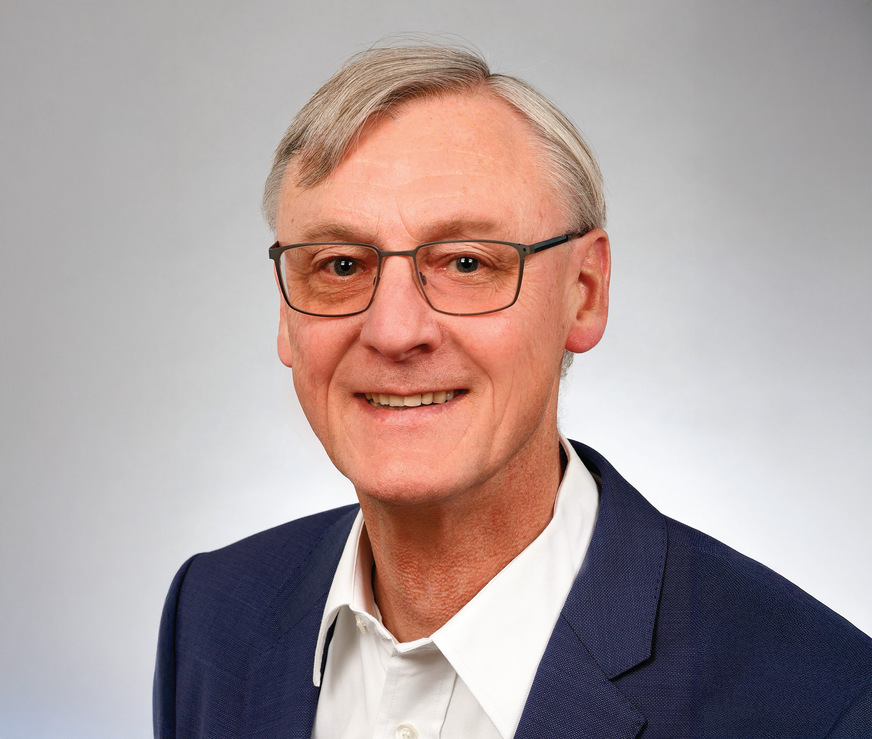
Christian Mohrdieck
About Christian Mohrdieck and Pajarito Powder Pajarito Powder, headquartered in Albuquerque, New Mexico, specializes in catalysts for electrolyzers and fuel cells. In 2020, the German automotive manager Christian Mohrdieck joined the board, and since April of this year he has been leading the company as CEO. Mohrdieck has served as CTO at Hyzon Motors, as CCO at Cellcentric and as CEO at Mercedes-Benz Fuel Cells, among other positions. He holds a doctorate in physics, studied in Germany and France, and is an honorary professor at the University of Ulm as well as a lecturer at the Vienna University of Technology. Founded in 2012, Pajarito Powder is quite small with XX employees compared to its customers in the automotive industry, but has major financial backers. These include the Hyundai Motor Company, NV Bekaert, Ecovyst, the Advanced Materials & Catalysts business unit of Technip Energies, the Verge Fund and Omphalos Venture Partners. For the production of its catalysts, Pajarito Powder uses both its own patents and licenses from Los Alamos National Laboratory. Its products include catalysts made from platinum group metals (PGM), Engineered Catalyst Supports (ECS) and Engineered Electrolyzer Catalysts (EEC).