

© Monika Rößiger
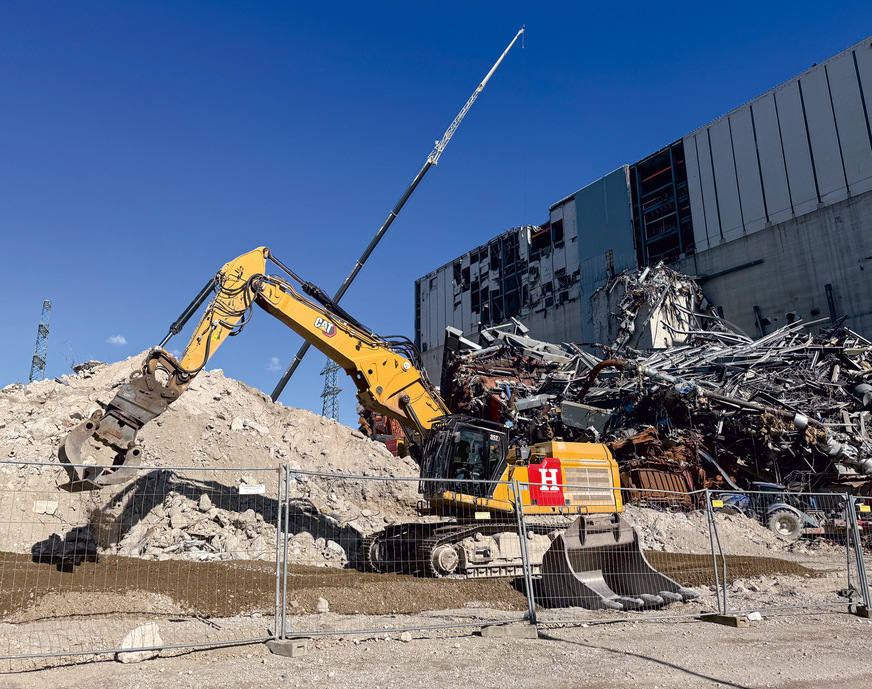
Relentlessly, excavators rumble over an area of about 16,000 square meters, tearing down one concrete wall after another. They are preparing the ground for a major transformation: the construction of a 100 MW electrolysis plant. In Moorburg, where the first steam engine of the Hanseatic city stood in 1911, one of the first large electrolysis projects in Germany is being created today with the Hamburg Green Hydrogen Hub (HGHH). The foundation stone was laid on December 1, 2025. From the second half of 2027, 10,000 tons of green hydrogen are to be produced here annually.
From Coal Power Plant to Hydrogen Factory
The operators Hamburg Energie and Luxcara are relying on PEM electrolysis, where the green gas is produced at atmospheric pressure and then compressed to 25 to 30 bar. The stacks for the electrolysis plant are manufactured at Siemens Energy's gigafactory in Berlin and assembled at the Mülheim site in North Rhine-Westphalia, explains Christoph Cosler, Head of Corporate Development at Hamburger Energiewerke and HGHH Managing Director. “A separate hall is being built for the new plant, where electrical technology and the gas side are cleanly separated.”
From Past to Future
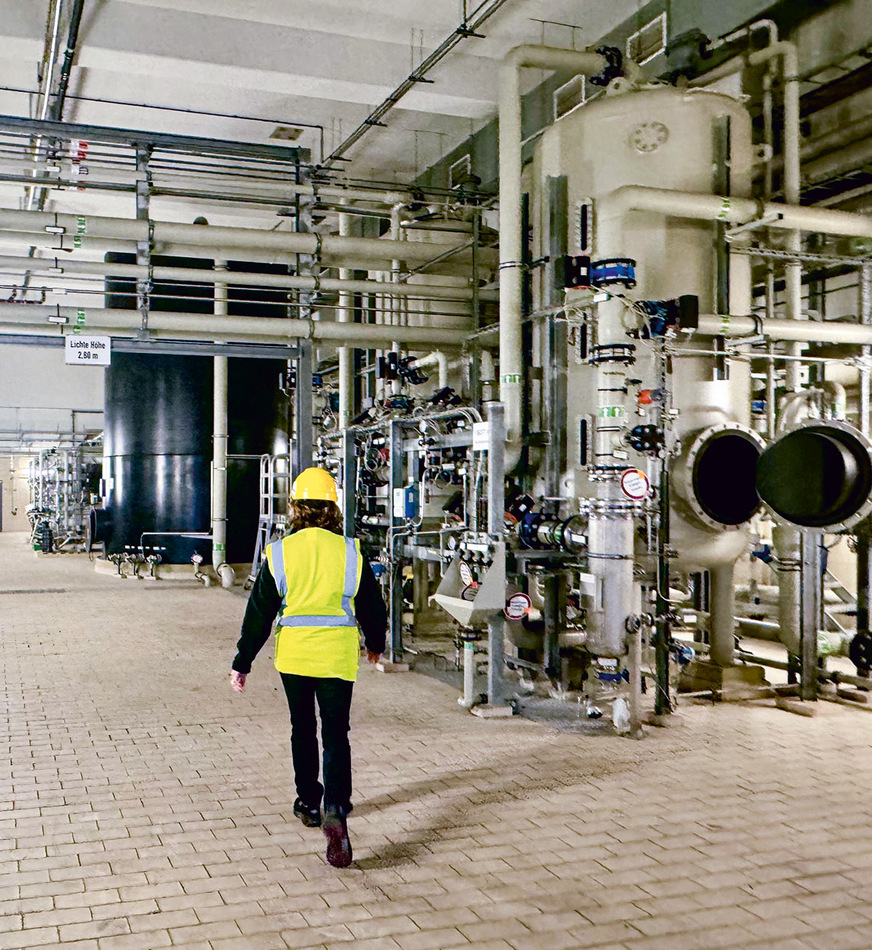
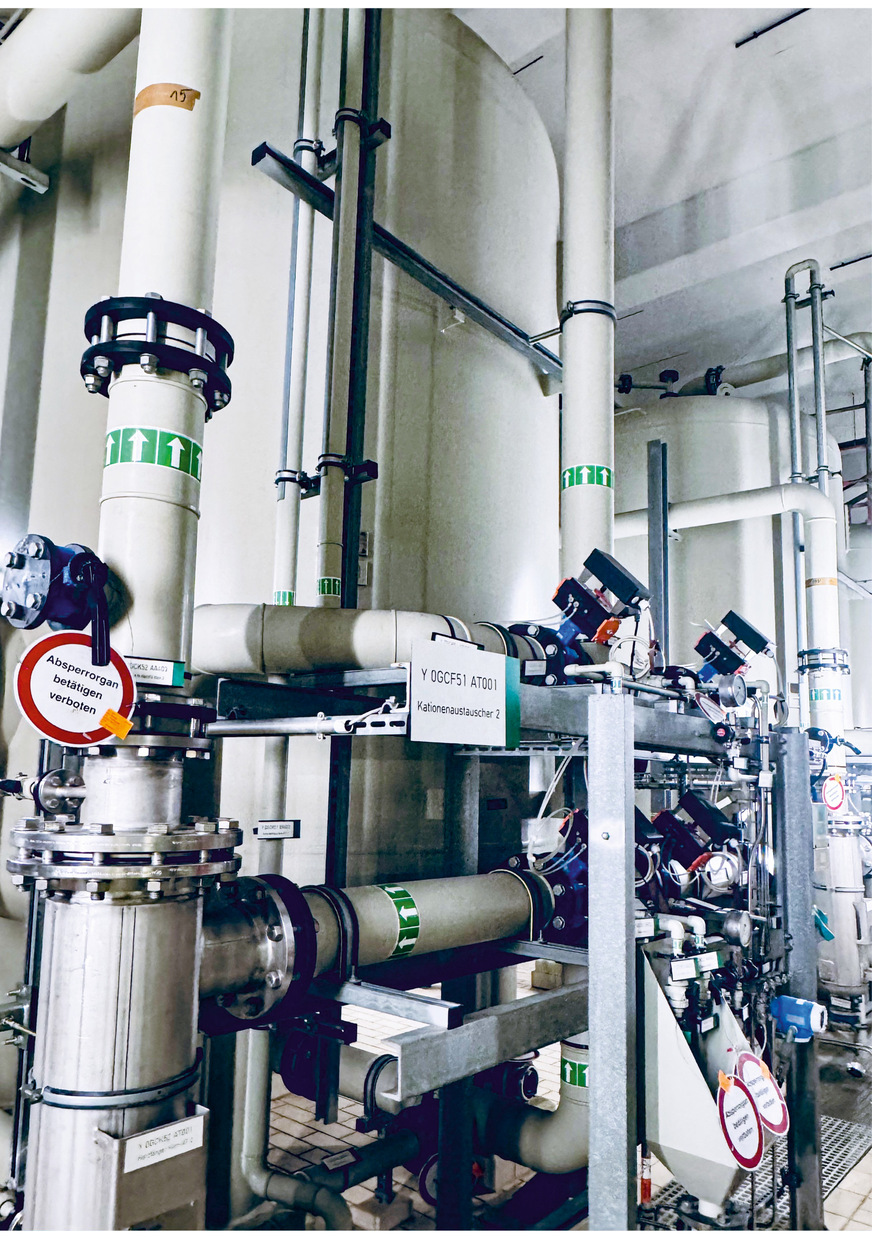
Previously, the distinctive structures of the coal power plant, including the almost 140-meter-high twin chimney and the two boiler houses, were demolished. Nevertheless, the operators assure that as much of the existing infrastructure as possible will continue to be used. For example, the 380-kilovolt connection will be retained, and the water treatment will be converted for Elbe water for electrolysis.
In mid-October this year, HGHH commissioned the Munich-based company Kraftanlagen Energies & Services to implement the so-called balance-of-plant infrastructure for its electrolyser. This includes, among other things, power distribution, water treatment, cooling and compressor stations, as well as the connection to the hydrogen network.
Flexibility is at the heart of the concept
Additionally, a truck loading station will be built. According to HGHH, this provides additional flexibility in the transport of hydrogen, as not only potential industrial customers in the port but also filling stations and commercial enterprises can receive the certified green gas if needed.
Since no stationary hydrogen storage is planned, trailers serve as mobile buffer storage. Each trailer holds one to two tons of hydrogen at a pressure of 380 to 500 bar. A 10–20 megawatt battery storage is intended to provide additional flexibility. The hydrogen reaches a trailer loading station via a pipeline and then continues to the gas transfer station for the Hamburg hydrogen industrial network HH-WIN.
Use in the Port, Industry, and Mobility
It is, of course, regrettable that Arcelor Mittal is not initially converting its wire rod mill in the Port of Hamburg to hydrogen, despite an existing direct reduction plant, admits Cosler. “But there are other steelworks in Germany that will need green hydrogen.”
The connection of the Hamburg hydrogen factory to the European Hydrogen Backbone is also planned for 2027. “From 2030, we see an immense demand for green hydrogen,” says Cosler. “Not only in the Port of Hamburg but throughout Germany.” Therefore, he also assumes that the already planned scaling of the electrolysis plant will be realized; up to 800 MW are possible according to the current state.
The Hamburg Hydrogen Industrial Network (HH-WIN) forms the basis for the future H2 infrastructure of the Hanseatic city. “By 2027, the first expansion stage of 40 kilometers is to be completed,” reports project manager Elisabeth Ziemann from the Hamburger Energienetze. Then the operation and the linking of local and regional markets will start. By 2031, the network is to be expanded to 60 kilometers.
The first phase is already under construction
It includes 33 kilometers of new construction and seven kilometers of converted existing lines. These were previously cleaned with so-called magnetic resonance and ultrasonic pigs and checked for their condition. A former power plant line also proved to be well-suited for hydrogen transport. The use of existing lines reduces both investment costs and the necessary construction work.
The diameter of the pipelines varies between 200 and 500 millimeters at pressure levels of 25 or 70 bar. Over a distance of 4.5 kilometers, hydrogen and power lines are currently being laid together to minimize the impact on nature conservation and residents.
1.4 million tons less CO2 per year
The decarbonization potential of HH-WIN is significant: Currently, according to Ziemann, 15 to 21 terawatt-hours of natural gas are transported through the network. About a third of this could be decarbonized, saving 1.4 million tons of carbon dioxide annually. The targeted connection of energy-intensive companies in the Port of Hamburg supports the city on its way to climate neutrality.
© Monika Rößiger
“Hamburg Future Decision”
In October 2025, the people of Hamburg voted to bring forward the city’s climate neutrality by five years, now to 2040. “This decision poses great challenges for the Hamburger Energienetze, but also for construction companies and trades,” says Bernd Eilitz, spokesman for the Hamburger Energienetze. Now it is important to explore all possibilities to further increase the already high pace of network expansion.
If households are to do without gas heating from 2040, the power infrastructure must be expanded by then so that electric heat pumps can be used everywhere where there is no connection to the district heating network. The referendum, however, has no impact on HH-WIN due to its already earlier commissioning.
European Integration
The Hamburg industrial network is also part of the IPCEI projects of the European Union and will be connected to the German hydrogen core network and the European Hydrogen Backbone. This allows Hamburg to feed the green gas into the core network and also draw from it. European integration also facilitates the import and export to and from Northern and Southern Europe and overall strengthens the security of supply on the continent.
© Monika Rößiger
The “Hamburg Green Hydrogen Hub”
The HGHH is an Important Project of Common European Interest (IPCEI) of the EU. The federal government and the state are funding it with more than 154 million euros. The city of Hamburg repurchased the Moorburg power plant from its former owner Vattenfall due to a referendum. The Hamburger Energiewerke are 100 percent owned by the Hanseatic city.
Capacity Reservations in Preparation
Industrial customers can reserve the required capacities for their future connection from the beginning of 2026 and thus gain planning security. A fee is charged for reservation contracts, which is later offset against the core network fee to be paid for the actual capacity booking.