

Japan has had a national hydrogen strategy since as early as 2017. There, household and mobility applications dominate. These are strongly cost-driven and must simultaneously meet the highest safety requirements, including safe handling by non-experts. Fuel cell heating systems or hydrogen-powered vehicles are frequently used in residential environments and are subject to strict standards. In addition, materials are exposed to strong and fluctuating mechanical loads that are sometimes unpredictable, for example due to potholes and varying loads. What is needed, therefore, are compact, dense, corrosion-resistant, and economically viable solutions. Added to this is the high importance of miniaturization: particularly in household and mobility applications, the available installation space is limited, which is why space-saving, integrated components play a central role.
In Germany, large-scale industrial plants pose different requirements. High-temperature electrolyzers and fuel cells or chemical reactors are usually designed for continuous operation and are exposed to extreme conditions: high temperatures, high pressures, and aggressive process gases. Here, long-term stability, scalability, and process reliability in the industrial sense are the primary concerns. Materials must also function reliably here over years without losing performance or developing safety-relevant weaknesses.
Largely unaffected by embrittlement
Regardless of the market, the same principle applies: hydrogen poses particular challenges for materials. Metallic materials can become embrittled under the influence of hydrogen, lose their tightness, or age more rapidly. In industrial plants, this can lead to efficiency losses, unplanned downtime, or increased safety risks, factors that significantly impair economic operation. Technical ceramics are inert to hydrogen, exhibit very low permeability, and retain their mechanical and chemical properties even under extreme operating conditions. They thus offer a robust option for applications in which conventional materials reach their limits.
High-performance ceramics combine properties that are particularly in demand in hydrogen environments: high temperature and corrosion resistance, electrical insulation, dimensional stability, and a long service life. Ceramics are less susceptible to hydrogen embrittlement than metals and thus enable greater operational safety, especially in demanding industrial processes with high thermal and chemical loads.
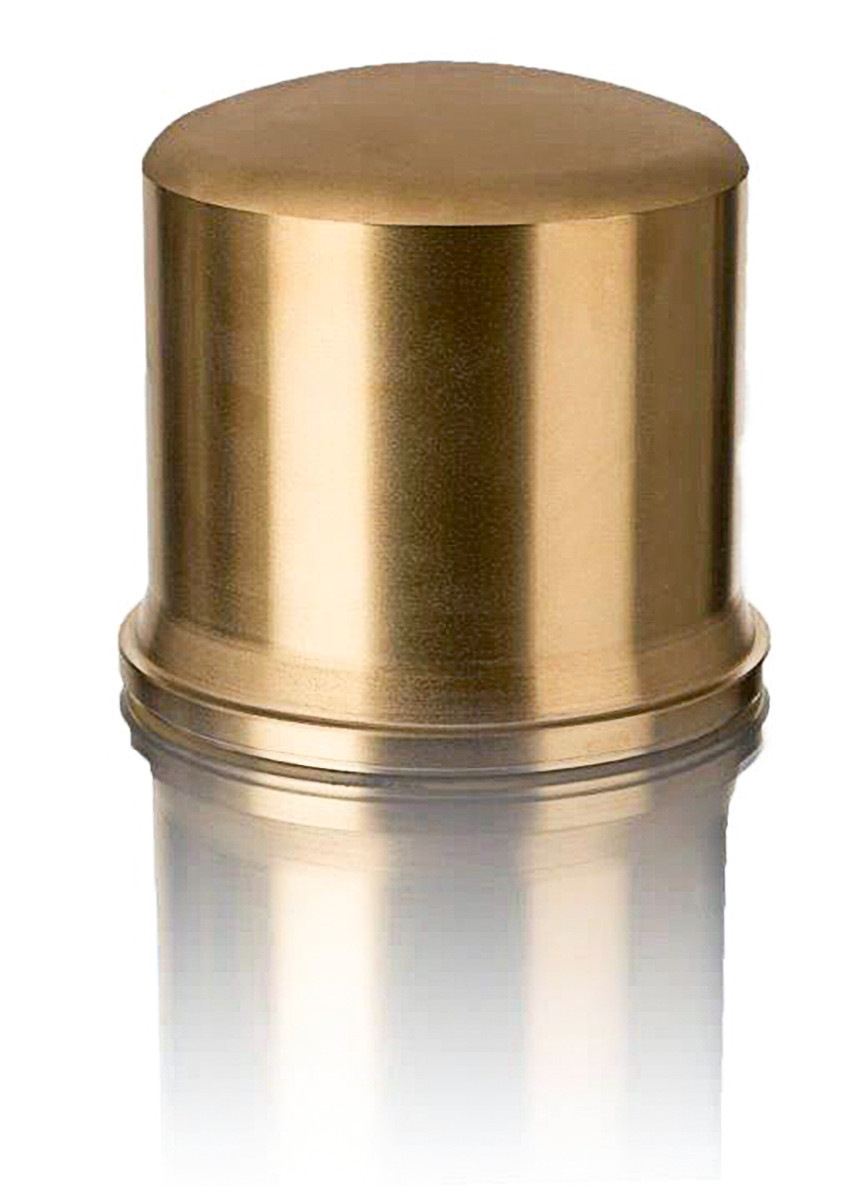
As a materials specialist with decades of experience, Kyocera supplies ceramic components for precisely these fields of application. The portfolio ranges from tubes, seals, and insulators to pump components, heat exchangers, and ceramic substrates.
© Kyocera
Material for membranes, seals, heat exchangers …
In the German market, there are several fields of application in which ceramic materials can demonstrate their strengths. These include fuel cells and electrolyzers, where ceramic components such as membranes, seals, tubes, or heat exchangers contribute to increased efficiency and extended service life. Particularly in high-temperature processes, their thermal and chemical stability is a significant advantage.
Ceramic components are also used in chemical plants, for example in the form of tubes, valve seats, or sensor housings. They offer a long service life, high resistance to corrosive media, and enable the miniaturization of sensitive components. In addition, there are applications involving cryogenic hydrogen: ceramic feedthroughs, insulators, and pump components meet the stringent requirements for tightness, insulation, as well as temperature and pressure resistance.
A further application example is ceramic substrates as carrier materials for catalysts, for instance in ammonia cracking. They enable a large active surface area, extend catalyst service life, and increase their efficiency.
Ceramics for high demands, metals for the masses The numerous technical advantages of ceramic components are also reflected in a higher acquisition cost compared to metallic or polymeric alternatives. Viewed over the entire life cycle, however, their use can pay off, for example in plants with high downtime costs, extreme process conditions, or limited installation space.
At the same time, ceramics are not a universal replacement for other materials but rather deliver their added value primarily in the demanding fields of application described above. For high-volume mass applications such as pipelines or simple piping systems, metals or polymers generally remain the more economical choice. A realistic, application-specific material selection is therefore crucial.
Hydrogen markets are developing differently, yet technological experience can be transferred. High-performance ceramic components that have proven themselves in household and mobility applications in Japan can also play an important role in the German industrial market, provided they are deployed in a targeted and realistic manner.