


Manufacturers of electrolyzers are still working to optimize their systems for hydrogen production. Efficiencies are to go up, costs down. This also changes the operating parameters and creates new challenges for the sensor technology used to monitor electrolysis.
An important process parameter is the fill level in the liquid circuit. Monitoring it prevents the system from running dry. “Fill levels that are too low can promote gas intermixing, which represents a safety risk,” says Nils Springmann, sales engineer at the sensor manufacturer Vega. “Fill levels that are too high can cause electrolyte to enter the gas lines and damage downstream components.”
Vega offers sensors for fill level measurement in a wide variety of electrolysis processes, including PEM, alkaline, AEM and SOEC electrolysis. For fill level measurement, the company relies on the physical principle of radar. This can be implemented in two different ways. In guided radar measurement, the microwave generated by the radar sensor is guided along a cable or rod to the medium. There it is reflected and received again by the sensor. The distance to the medium surface, and thus the fill level, can be determined from the signal’s transit time.
PFA coating protects against potassium hydroxide solution
In aggressive media such as potassium hydroxide solution (KOH), measuring rods with a PFA coating are used. This chemically extremely stable protective layer prevents corrosion of the base material. However, the coating reaches its limits at higher pressures. KOH can then penetrate through microdamage or stress in the coating down to the underlying stainless steel and cause corrosion. More resistant materials are therefore used in such applications.
Alternatively, the fill level can also be detected with a free-radiating radar. A higher-frequency radar wave is used for this. With this measurement method, the sensor does not come into contact with the medium. The measurement is non-contact. Both methods work continuously and can be used in various electrolysis processes.
© Marquardt
Pressure and differential pressure measurement
Another important parameter is pressure. In alkaline electrolysis, the spectrum ranges from systems at atmospheric pressure to pressurized processes with about 30 bar. The pressure must be continuously monitored to comply with the permissible operating limits and to protect the system from damage caused by overpressure. For pressure measurement, Vega offers sensors with ceramic measuring cells. These are also resistant to KOH electrolyte solutions. The portfolio comprises a Basic and a Pro series. Particularly in auxiliary circuits in PEM electrolysis, the more cost-effective Basic series is frequently used. However, if functional safety requirements such as SIL must be met, the Pro series is required.
The differential pressure between the anode and cathode compartment is also one of the process variables that are monitored in an electrolyzer. It serves both to monitor the membrane condition and to detect contamination. In addition, an excessively high pressure difference between the oxygen and hydrogen side must be avoided to prevent the gases from crossing over to the other side.
For differential pressure measurement, Vega uses diaphragm seal systems consisting of a metallic separating diaphragm and a transmission fluid. Vega also offers variants with a gold coating that prevents hydrogen diffusion into the diaphragm seal oil.
The differential pressure sensor can also be used for fill level determination in applications with overpressure in the vessel. On the positive side, the pressure of the liquid column and the gas space are recorded together, while on the negative side only the gas pressure is measured. The difference yields the hydrostatic pressure of the liquid column, from which the fill level is calculated.
© Marquardt
Temperature monitoring with Ex approval
Explosion protection also plays an important role in monitoring an electrolyzer. The sensor specialist Jumo manufactures pressure and temperature sensors specifically tested for use with hydrogen in order to enable safe operation in the electrolyzer periphery. Jumo supplies products ranging from the sensor to the automation level to evaluation via the cloud. In the area of temperature sensors, Jumo manufactures resistance thermometers with SIL and Ex approval. They consist of a protective fitting according to DIN 43772 with various process connections, a connection head and a replaceable measuring insert.
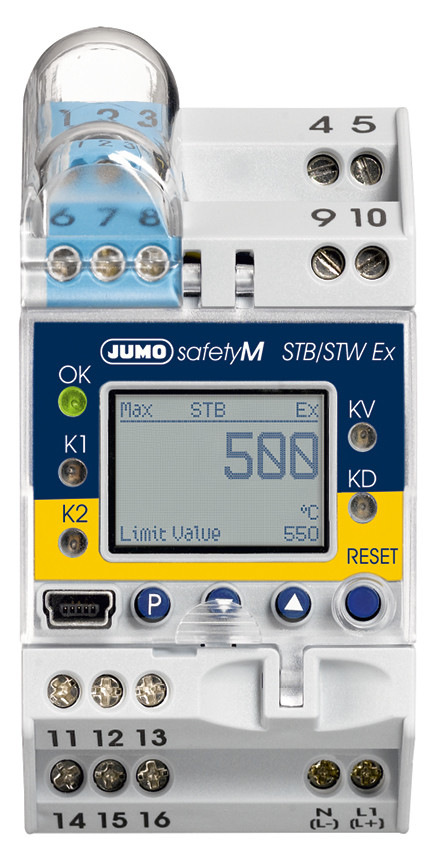
Jumo also offers a compact, freely configurable safety temperature limiter according to DIN EN 14597, which likewise has SIL and Ex approval. It is intended to detect hazard potentials in the Ex area early and safely. Together with a resistance thermometer or thermocouples, the setup achieves SIL 3 certification.
Ultrasound can determine concentrations
The company Allengra focuses on sensor technology using ultrasound. For alkaline electrolysis, the company offers ultrasonic sensors to detect the concentration of potassium hydroxide solution. “The KOH concentration influences the electrical conductivity, the efficiency and the material load,” says Jan Wessels, product and portfolio manager at Allengra. “If there is too little KOH in the electrolyte, the H2 production rate decreases due to the higher electrical resistance. If the KOH concentration is too high, however, you get a problem with corrosion.” There is thus an optimal operating range that can be monitored with ultrasound.
To determine the KOH concentration, the sensor is equipped with two ultrasonic transducers that can emit and receive sound waves. This allows them to measure the speed of sound in the medium, which in turn depends on the KOH concentration, because the speed of sound in KOH is higher than in water. This measurement principle is also used in the anode recirculation of fuel cells (see sidebar).
© Jumo
Detecting hydrogen leaks
The automotive supplier Marquardt is currently expanding its sensor portfolio for electrolysis applications. A flow sensor and a high-voltage sensor are already available. Both products originally come from heat pump and battery technology, respectively, and are also suitable for hydrogen applications. In addition, the company offers a CVM system for monitoring the cell voltages in electrolysis cells (see H2international 3/2026, page 46).
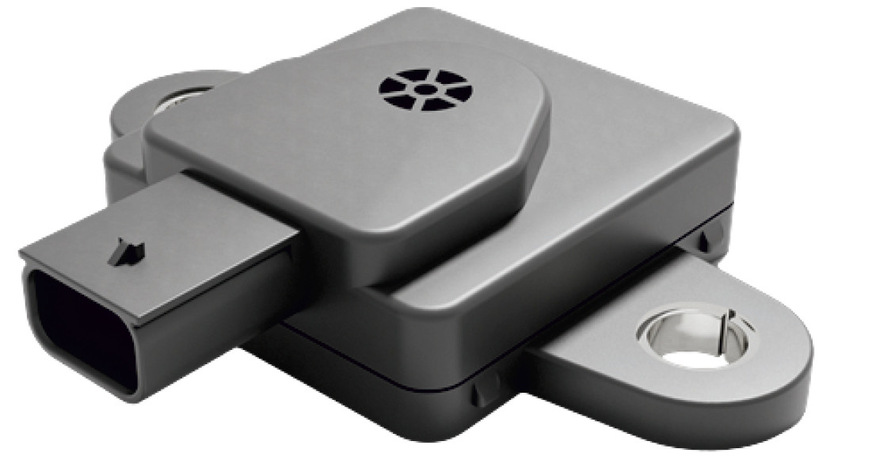
New to the portfolio is a production-ready hydrogen leak sensor developed specifically for use in electrolyzers and fuel cells. The sensor detects hydrogen concentrations up to 4 percent with high accuracy, that is, up to the lower explosion limit of hydrogen. Marquardt does not fundamentally commit to a specific measurement principle, but instead develops application-specific sensor solutions for high volumes. The focus is on compact, lightweight sensors with injection-molded plastic components that can be cost-effectively manufactured in-house.
The leak sensor works on the principle of thermal conductivity. “Our sensor exhibits only low cross-sensitivity to other gases,” says Martin Götz, systems engineer at Marquardt. At the same time, it covers a wide temperature range. In addition to thermal conductivity, the device also records temperature, humidity and pressure, since these parameters are required for precise concentration determination. With a response time of less than three seconds, hydrogen leaks can be quickly detected. The sensor is currently available with a digital interface. An analog variant is in planning. The goal is to deploy the cost-effective leak sensor at several critical points in the electrolyzer and thus continuously monitor the tightness of the hydrogen lines.
Cost-effective sensor for low electrical conductivities of liquids
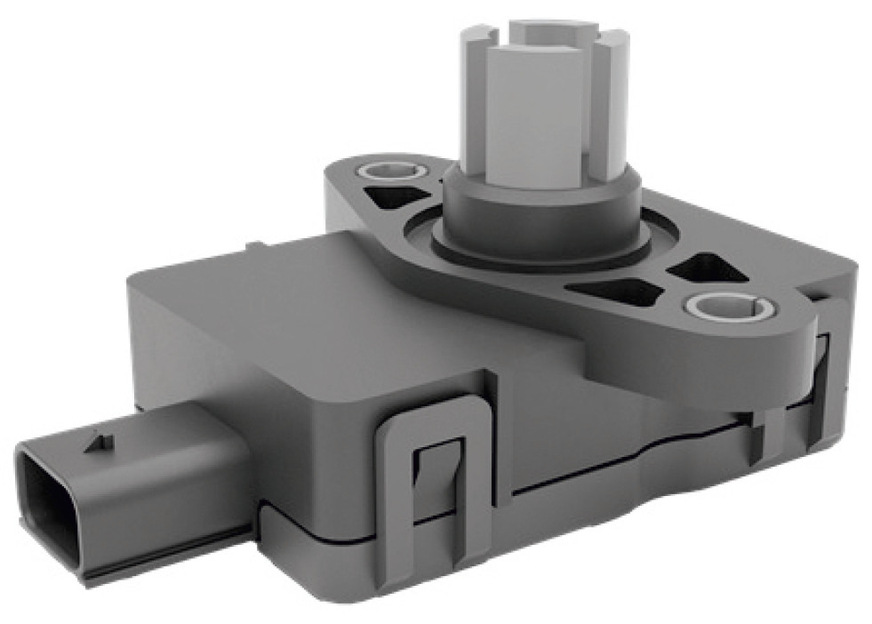
Another sensor for electrolysis applications is currently under development at Marquardt. It is a sensor for measuring the electrical conductivity of liquids, an important process parameter of electrolysis. It is intended to monitor the water supply of electrolyzers and can also be used in cooling circuits of fuel cells. The sensor is designed for very low conductivities in the range of 0 to 5 µS/cm. For this purpose, Marquardt uses plastic electrodes mixed with carbon fibers and conductive particles. Compared to metal electrodes, they do have a higher internal resistance; however, this plays only a subordinate role when measuring such low conductivities.
By using plastic electrodes, the entire sensor can be manufactured in a single injection molding step. In addition, the thermal expansion coefficients of plastic electrodes and housing differ only slightly, which supports a permanently stable seal. In contrast, with metal electrodes, which are usually sealed via sealing rings, cracks can develop in the sealing material over time. Another advantage is the high integrated insulation strength. It prevents fault voltages from reaching the higher-level control electronics. However, further development steps are still needed before series production readiness. “We are currently working in particular on reproducibility and on the housing,” Götz explains.
Cost-effective sensor technology can improve the monitoring of electrolysis, increase efficiency and extend the service life of the systems. For this, the sensor manufacturers already offer a broad product portfolio and are working on new developments.
Monitoring anode recirculation in fuel cells
© Allengra
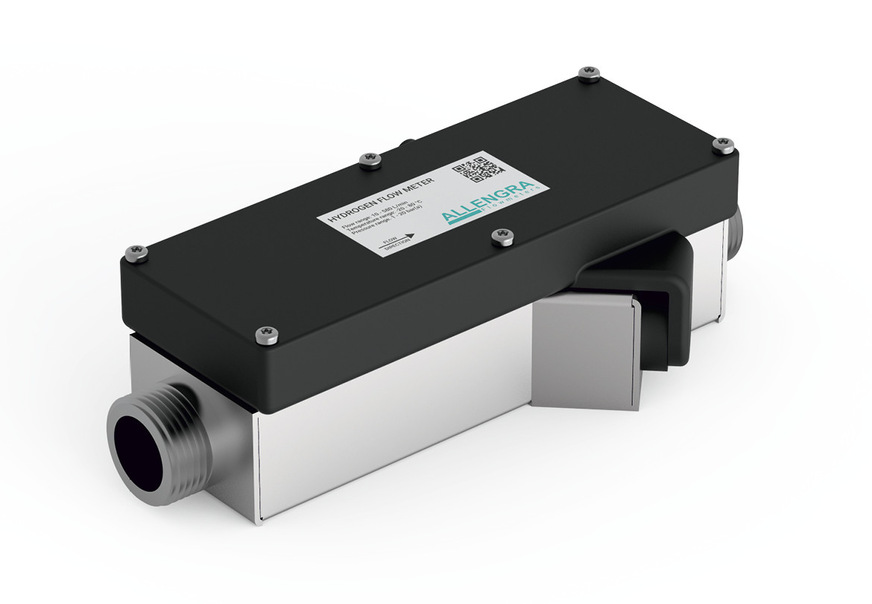
In fuel cell systems, anode recirculation ensures that excess hydrogen flows back into the fuel cell. To prevent nitrogen and moisture from accumulating, these must be regularly released via the purge valve. To avoid unnecessarily large amounts of hydrogen escaping in the process, sensors can monitor the hydrogen concentration and enable the optimal timing of the purge. For this purpose, Allengra uses a hydrogen flow sensor based on the ultrasonic measurement principle. It can measure the volume flow and the composition of the gas mixture and is also equipped with pressure and temperature sensors. Allengra uses a stainless steel construction for this.
Marquardt is also currently developing an ultrasonic sensor for anode recirculation that determines the hydrogen concentration. The company relies on glass-fiber-reinforced plastic and expects cost advantages compared to a metal version at high volumes. An additional advantage is that the non-contact ultrasonic measurement does not interfere with the flow and therefore does not cause any additional pressure loss.
Measurement technology for fuel cell stack production
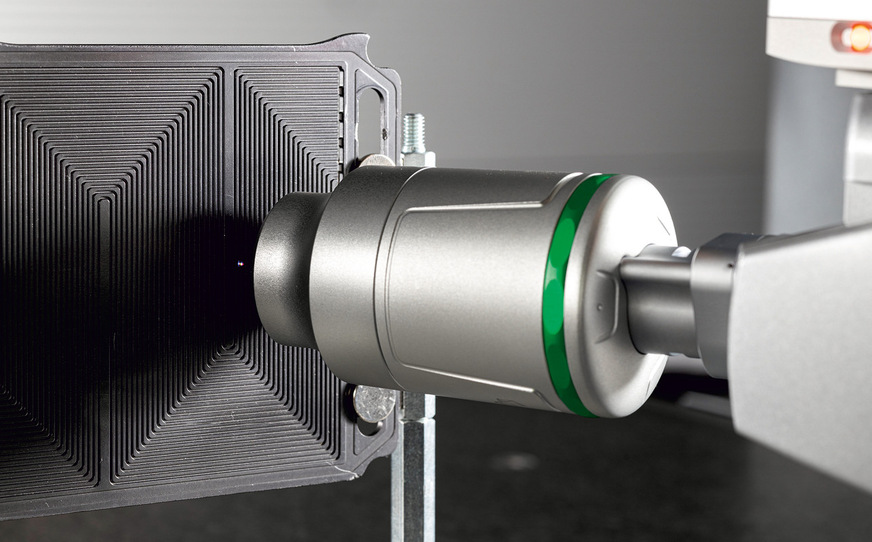
© Hexagon
A fuel cell stack can contain up to 400 bipolar plates. Each of them is only 0.05 to 0.1 millimeters thick and has a complex and intricate flow field structure, through which the reaction gases are later distributed. Even the smallest deviations in this structure or in the position of the plate relative to the other stacking elements have a direct impact on the performance and service life of the entire stack.
The company Hexagon offers measurement technology to monitor the production of bipolar plates. When a production line is being commissioned, a high-precision coordinate measuring machine (CMM) with sub-micrometer accuracy is used. The focus here is on the flow field structure itself. From a measurement perspective, the geometry must be inspected at defined profile sections. Since the components must not be damaged or deformed in the process, an optical, non-contact measurement method is used. A high-resolution white-light sensor, in conjunction with a rotary-tilt unit, scans a profile line.
To enable fast and accurate stacking of the fuel cell components in the stacking process, the measurement system is extended with a tactile probe system. In combination with the optical white-light sensor, it ensures the precise metrological alignment of the bipolar plate.
Once the line is up and running, the measurement approach changes: in the ongoing, stable production process, the measurement system is only used for spot-check measurements.